Discover our curated exhibitions featuring contemporary artists from around the world
The exhibition AQ JORǴA presents an artistic inquiry into the culture of the steppe and its emblematic symbols. Within this context, the horse emerges as a conduit to the world of the steppe—a domain where time flows with a different rhythm, where the whisper of wind through the grasses is heard, and where the horizon seamlessly joins earth and sky. Vladimir Bystritsky’s oeuvre invites the observer to reconnect with this profound simplicity and depth. His works serve as a reminder that the steppe transcends mere geography, embodying a distinctive state of freedom in which humanity can rediscover its bond with nature, motion, and the essence of life.
&
Forte Kulanshi Art Space presents the exhibition project ATTIÑ JALINDA, dedicated to the union between humans and horses, the oldest companions in history who expanded the boundaries of the inhabited world. The project aims to demonstrate how artists interpret the interaction between humans and natural forces in the modern world.
KULANSHI ART GROUP, in collaboration with the Embassy of the Republic of Turkey in Kazakhstan, presents a solo exhibition by artist Ahmet Öğreten entitled ‘Tracing the water: From The Bosphorus to The Great Steppe’. The display includes 60 watercolor paintings created over the last ten years. The project invites visitors to explore the work of one of Turkey's most prominent watercolor artists and observe how the author refers to the common cultural and historical roots of the Turkic peoples.
“Handle with Care!” is a solo exhibition by Lizaveta Antropova, dedicated to the value of fleeting states, memory, and inner sensations. Through watercolor, the artist explores fragility as a form of significance—within urban landscapes, recollections, everyday gestures, and personal experiences.
The FORTE KULANSHI ART SPACE opens in 2026 with a solo exhibition by Sembigali Smagulov, showcasing his paintings, graphics, and sculptures. Smagulov’s works - powerful, original, and deeply rooted in culture - combine form, temperament, and meaning to create a striking, direct artistic experience.
The art of Tabigat Kozhanbayev emerges from a space where the ancient breath of the steppe meets the industrial traces of the present. His works are not merely objects made of leather, metal, wood, and rubber. They are testimonies to an invisible dialogue - between archaic memory and contemporary time, between stillness and movement, between the human and the material. In the composition “Silence of Centuries”, leather and metal are enclosed within a circle of an automobile tire - a symbol of the road, of movement, of time. From within the circle emerges a human face, like an artifact, a mask, a memory of those who came before us. Its silence is not the absence of speech but the concentrated experience of generations. The industrial material surrounding the sacred image creates tension between past and present, organic and mechanical, motion and stillness.
“Once there was, and Once there wasn’t” is an exhibition project that brings together a collection of folktales told by migrant women from countries along the ancient Silk Road and illustrated with photographs by contemporary female photographers.
We are concluding 2025 with a very important project that brings together 50 paintings by the outstanding classic of Kazakh painting, Abdrashit Sydykhanov (1937-2011). Like some other artists of the 1960s, he stood at the origins of the formation of the national art school, developing it to a fundamentally new level. As part of the project, it was important for the curators to show the most unusual stage of the artist’s creative work for the viewer—his late period. This period of “sign painting” (tanba — “sign”) is full of colors, textures, and complex philosophical and aesthetic intertwining.
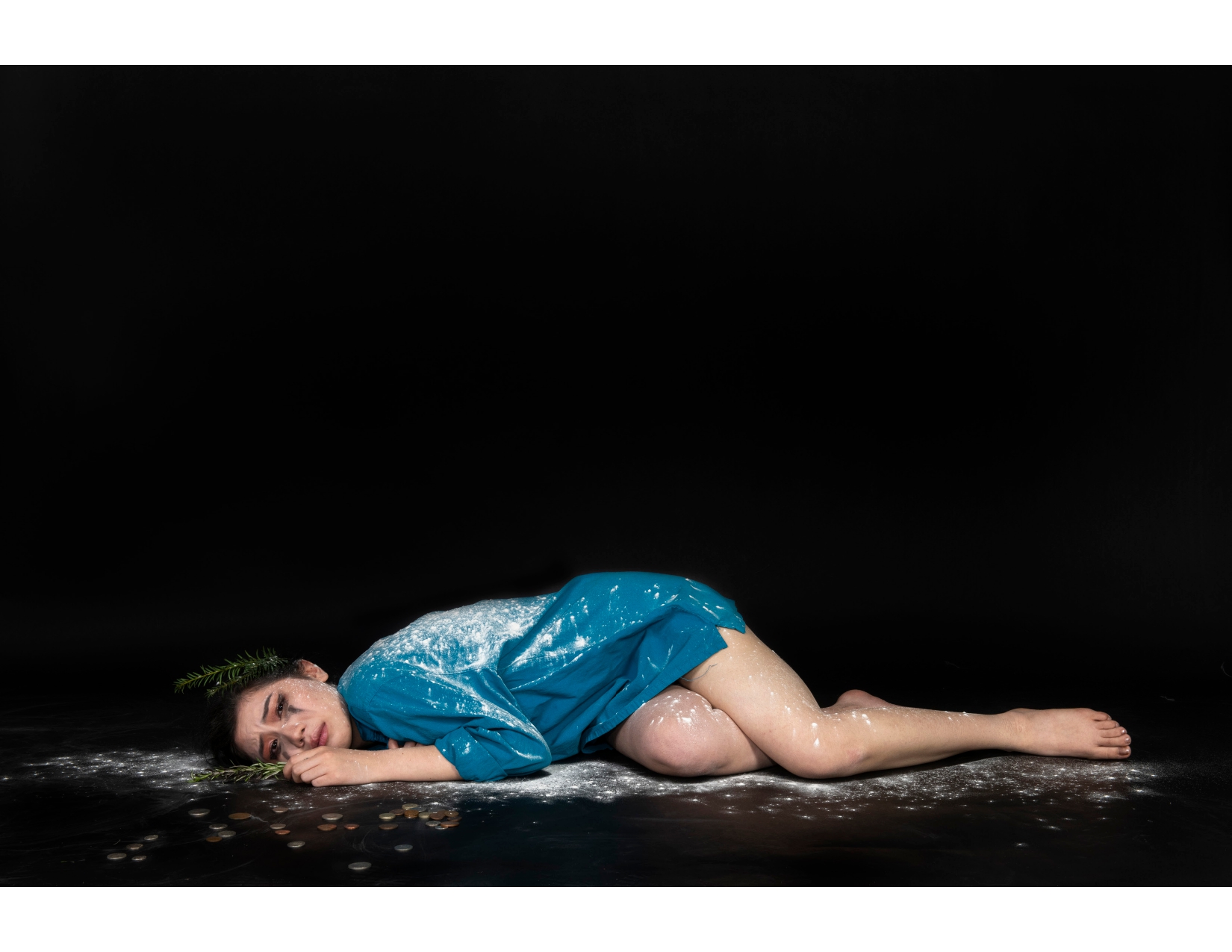
The SHAPE OF FEELING exhibition is part of the international campaign "16 Days of Activism Against Gender-Based Violence", supported by the Embassy of the Kingdom of the Netherlands in the Republic of Kazakhstan. The project combines contemporary visual and theatrical arts with a global dialogue in the fight against one of the most pressing issues of our time. Its goal is to promote ideas of solidarity, spiritual resistance, and hope for a new world without violence.
The exhibition “HOLA=SALEM” brings together the works of nine contemporary artists from Spain and Kazakhstan, inviting viewers to observe how a dialogue is established between artistic traditions and individual practices.
"QAZAQ CONTENT" is a statement about culture not as decoration, but as a living mechanism of memory and self-awareness. The exhibition brings together artists from different regions of the country, proposing unity not in style but in meaning.
“Who is your clan? Who is your spirit?” — this question lies at the core of Leyla Mahat’s project "RUUIÑ KİM / RUHIÑ KİM". The exhibition opens a visual space of memory. Through the imagery of the horse, the tamga, and the sacred symbol of the abak, the deep philosophy of Kazakh civilization is revealed.


.png&w=3840&q=75)
-1.jpeg&w=3840&q=75)
-1.png&w=3840&q=75)
.png&w=3840&q=75)


